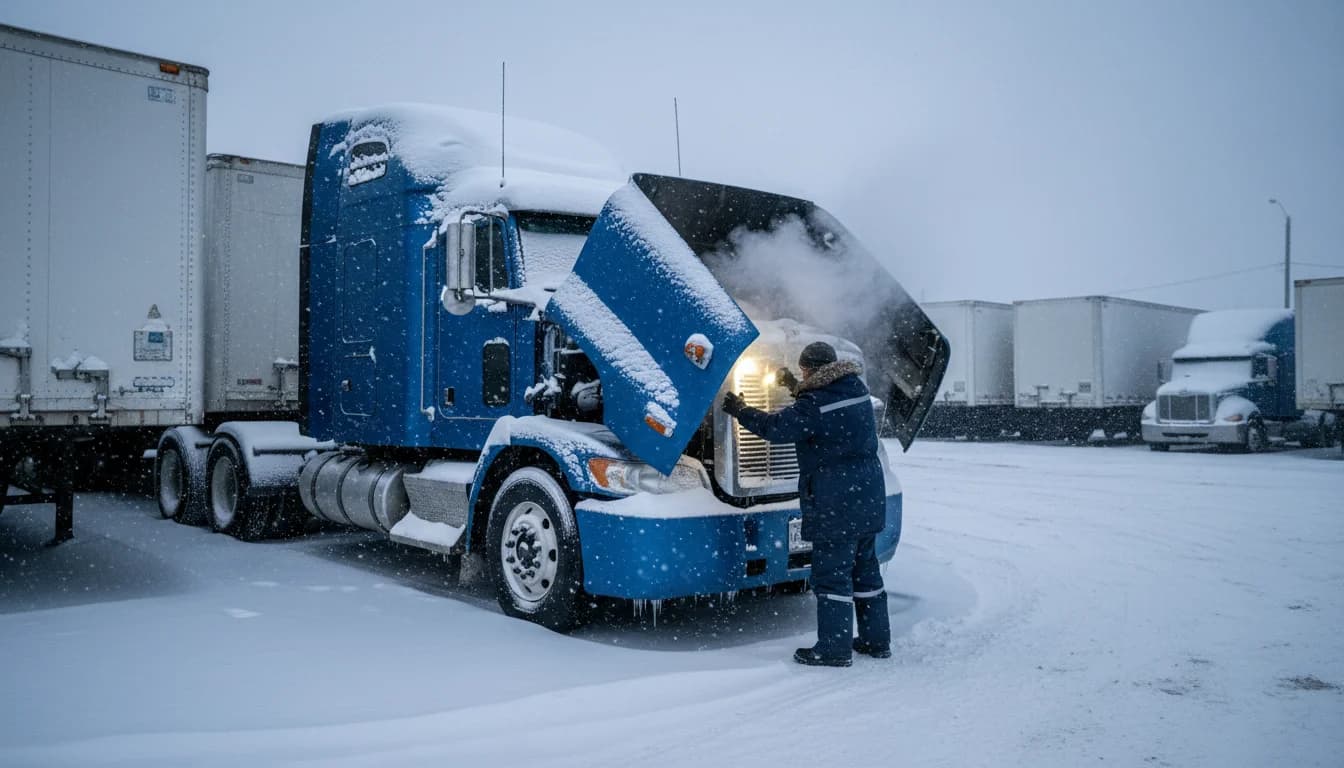
Cold weather and diesel trucks have a complicated relationship. Diesel fuel gels, batteries lose cranking power, coolant systems are pushed to their limits, and air systems fill with moisture that freezes in the worst possible places.
If you drive in any market that sees temperatures below 30°F, winter preparation isn't optional. Here's a comprehensive checklist to get your truck ready before the cold hits.
Fuel System Winterization
Diesel fuel gels when wax crystals form at low temperatures, clogging filters and fuel lines. This is the #1 cause of winter no-starts.
Checklist:
- Switch to winter-blend diesel (#1 diesel or blended #1/#2) when temps drop below 20°F regularly
- Add a fuel treatment/anti-gel additive at every fill-up in cold months (Power Service, Howes, or similar)
- Replace fuel filters — a partially clogged filter gels faster than a clean one
- Carry spare fuel filters and a bottle of emergency anti-gel treatment
- Consider installing a fuel heater if you operate in extreme cold regularly
Why it matters: A gelled fuel system means your truck won't start — period. Anti-gel treatment is $10 per tank. A roadside no-start call at 3 AM in January is significantly more than that.
Battery & Electrical System
Cold weather kills batteries. A battery that cranks fine at 80°F may not have enough power at 0°F.
Checklist:
- Load test all batteries — replace any that test weak before winter
- Clean and tighten battery terminals and cables
- Check alternator output — verify it's charging at full capacity
- Inspect block heater cord and element — plug in when temps drop below 20°F
- Verify glow plug or intake heater operation (if equipped)
- Check all lighting — shorter days mean more hours with lights on
Why it matters: A dead battery is the second most common winter breakdown. Load testing catches weak batteries before they leave you stranded. A block heater reduces cranking strain and warm-up time dramatically.
Cooling System
Your cooling system works the opposite way in winter — it needs to prevent freezing, not just prevent overheating.
Checklist:
- Test coolant freeze point — it should protect to at least -34°F (or lower for extreme climates)
- Inspect coolant hoses for cracks, swelling, or soft spots
- Check thermostat operation — a stuck-open thermostat prevents the engine from reaching operating temperature
- Verify heater core function — if your cab heater isn't hot, investigate
- Inspect water pump for weeping or play
- Check fan clutch engagement — a fan that won't disengage overcools the engine in winter
Why it matters: Coolant that freezes can crack an engine block — a catastrophic and unrecoverable failure. A $30 coolant test can prevent a $20,000+ engine replacement.
Air System & Brakes
Moisture in the air system is your enemy in winter. Water condenses in air tanks, lines, and valves — then freezes.
Checklist:
- Drain all air tanks (wet tank and dry tanks) — start doing this daily in cold weather
- Inspect and service the air dryer — replace desiccant if overdue
- Check for air leaks — even small leaks cause the compressor to cycle more, generating more moisture
- Verify air dryer heater operation (most have an electric heater to prevent freeze-up)
- Add alcohol evaporator or air line antifreeze if operating in extreme cold
- Check brake adjustment — cold weather makes marginal brakes worse
Why it matters: Frozen air lines mean no brakes. This is a safety-critical system failure that can also result in an OOS violation. Daily tank draining is the simplest and most effective prevention.
Tires
Cold temperatures reduce tire pressure. For every 10°F temperature drop, tires lose approximately 1-2 PSI.
Checklist:
- Check and adjust tire pressure more frequently in cold weather
- Inspect tread depth — minimum 4/32" on steer tires, 2/32" on drive and trailer
- Check for uneven wear that could indicate alignment or suspension issues
- Carry tire chains if you operate in areas that require them
- Practice installing chains before you need to do it on the side of a mountain pass at night
Why it matters: Low tire pressure plus cold temperatures is a recipe for blowouts. And if you need chains and don't have them (or can't install them), you're stuck.
Cab & Comfort
Driver comfort isn't a luxury in winter — it's a safety issue. A cold, uncomfortable driver is a fatigued, distracted driver.
Checklist:
- Verify cab and bunk heaters work properly
- Check APU operation (if equipped) — don't rely on idling for heat
- Test all window defrosters — front, side, and mirrors
- Wiper blades — replace if streaking or worn
- Fill washer fluid with winter-rated solution (-20°F or below)
- Carry winter emergency supplies: blankets, gloves, flashlight, food, water
Why it matters: If you break down in extreme cold, your survival may depend on being able to stay warm in the cab until help arrives.
Final Pre-Winter Inspection
Before winter hits, consider scheduling a comprehensive inspection that covers:
- All the items above
- Drive belt condition and tension
- Exhaust system for leaks (carbon monoxide risk)
- Suspension and steering components (cold makes rubber bushings stiffer)
- All fluid levels
A mobile mechanic can perform this inspection at your yard or terminal — no need to take the truck to a shop.
The Bottom Line
Winter preparation takes half a day and costs a few hundred dollars in parts and fluids. Winter breakdowns cost thousands in repairs, lost loads, and missed deliveries. The math is simple. Winterize before the first freeze and you'll be the driver who's still running when half the fleet is sitting in the cold waiting for service.