
Breaking down on the highway is every truck driver's worst nightmare. One minute you're cruising at 65 mph with a full load, the next you're watching warning lights flash while semi-trucks blow past your mirrors at speed. It's stressful, it's dangerous, and it's going to cost you money every minute you sit there.
But how you handle the first 10 minutes after a breakdown can make the difference between a quick repair and a day-long ordeal. Here's exactly what to do.
Step 1: Get Off the Road Safely
Your first priority is getting your truck as far off the travel lanes as possible. If you can make it to an exit ramp, truck stop, or rest area — do it. A safe parking spot is always better than a highway shoulder.
If you can't make it off the highway:
- Pull as far right as possible onto the shoulder
- Turn on your four-way flashers immediately
- If it's dark, turn on all available lighting
- Don't stop on a curve or just over a hill if you can avoid it
Step 2: Protect the Scene
Once you're stopped, you have about 10 minutes before the real danger kicks in. Rear-end collisions with stopped trucks are far too common.
- Set out your emergency triangles — one at 10 feet, one at 100 feet, and one at 200 feet behind your truck
- If you have flares, use them too — especially at night
- Stay in your cab unless you need to set out triangles. The cab is the safest place to be.
Step 3: Assess What Happened
Before you call anyone, take 60 seconds to figure out what you know:
- What warning lights are on?
- What did you hear, smell, or feel before the breakdown?
- Is the engine running or dead?
- Is there fluid on the ground? What color?
- Can you see obvious damage (flat tire, blown hose, steam)?
This information will help your mechanic arrive with the right tools and parts.
Step 4: Call for Help
This is where most drivers lose time. The old-school approach is to call your fleet manager, who calls a dispatch service, who calls a tow truck, who tows you to a shop, where you wait for a bay to open up.
That process can take 6-12 hours.
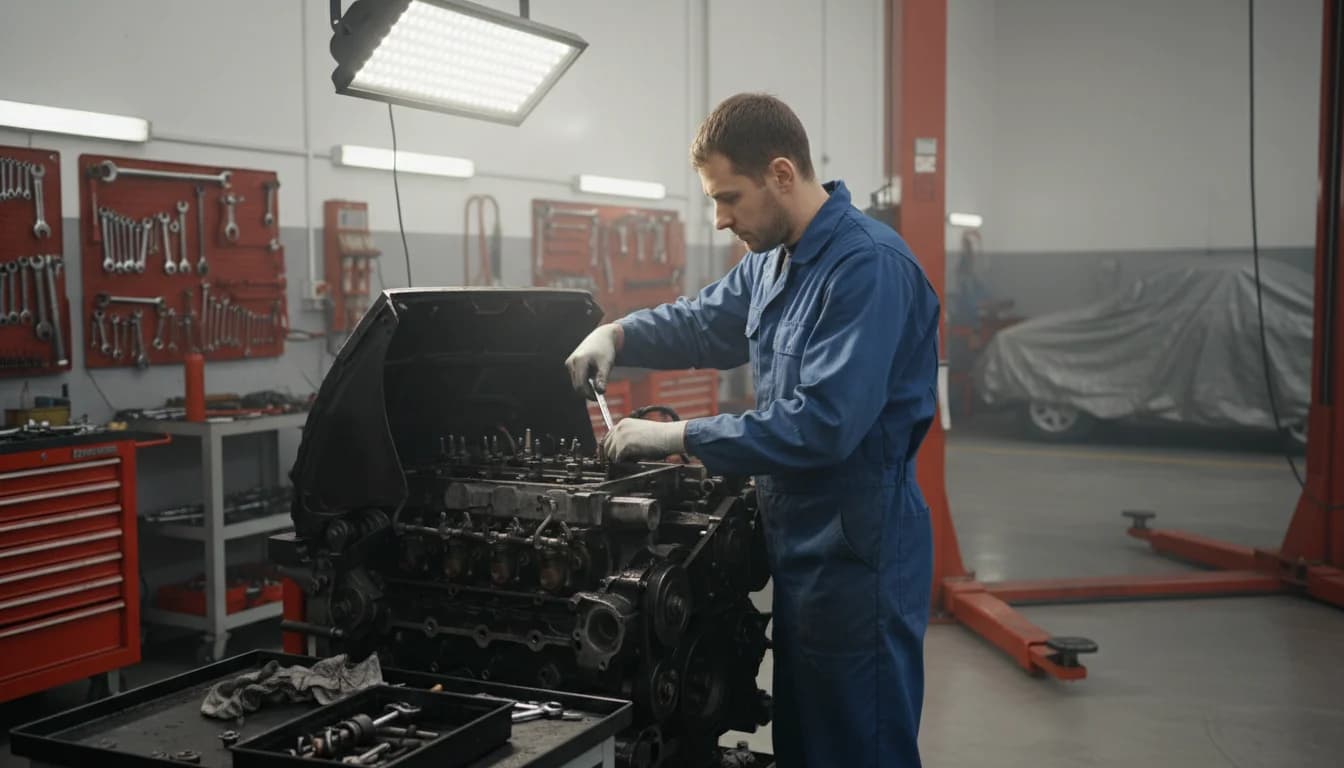
A faster option: mobile diesel repair. Services like Mobile Diesel USA dispatch a mechanic directly to your GPS pin. No tow truck and no shop wait. In the Phoenix metro, dispatch confirms a mechanic and you follow them live once one accepts.
When you call, have this information ready:
- Your exact location (GPS coordinates, mile marker, or nearest exit)
- Truck make, model, and year
- Engine platform (Cummins, Detroit, PACCAR, etc.)
- Description of the problem
- Whether your load is time-sensitive
Step 5: Communicate Your Status
While you wait for help:
- Update your dispatcher or fleet manager
- If your load is time-sensitive, let the receiver know about a potential delay
- Check your ELD — your on-duty clock is still running
Step 6: Stay Safe While You Wait
Highway shoulders are dangerous places. Every year, hundreds of people are killed in incidents involving stopped vehicles on the roadside.
- Stay in your cab with your seatbelt on when possible
- If you must exit, do so from the passenger side (away from traffic)
- Wear a high-visibility vest if you have one
- Don't try to make repairs in the travel lanes — ever
The Bottom Line
Breakdowns are part of trucking. But the drivers who handle them well — who stay calm, protect the scene, communicate clearly, and call the right people — get back on the road faster with less stress and less cost.
Keep your emergency kit stocked, know your breakdown procedure, and have a mobile repair service saved in your phone before you need one. When that check engine light hits at 2 AM on I-40, you'll be glad you planned ahead.