If you drive a diesel truck built after 2007, you have a diesel particulate filter (DPF) — and there's a good chance it's caused you at least one headache. DPFs are part of the aftertreatment system that keeps your truck emissions-compliant, and when they fail, your truck goes into derate. That means reduced power, limited speed, and lost revenue.
Here are the 5 DPF problems every trucker needs to understand.
1. Failed Passive Regeneration
Your DPF is designed to clean itself through a process called regeneration. During passive regen, exhaust temperatures get hot enough to burn off accumulated soot — typically during highway driving at sustained speeds.
The problem: Short trips, excessive idling, and city driving prevent your exhaust from reaching regen temperature. Soot builds up faster than it burns off.
What you'll notice: A regen light on the dash, followed by a high exhaust temperature warning, and eventually a derate condition.
What to do: If you catch it early, a sustained highway drive at 1,500+ RPM for 20-30 minutes may trigger a passive regen. If the soot load is already too high, you'll need a forced regen from a mechanic with the right diagnostic software.
Prevention: Avoid excessive idling and short trips when possible. Highway miles are your DPF's best friend.
2. Ash Accumulation
Even successful regeneration doesn't remove everything. Oil ash — tiny incombustible particles from engine oil consumption — accumulates over time and can't be burned off. This is normal wear.
The problem: As ash builds up, the DPF becomes less effective and regens happen more frequently. Eventually, the filter needs professional cleaning or replacement.
What you'll notice: More frequent regens, gradually increasing back pressure, and eventually a maintenance light or code indicating high ash loading.
What to do: DPF cleaning is a maintenance item, not a repair. A professional DPF cleaning service uses compressed air and sometimes a baking process to remove ash from the filter substrate.
Prevention: Use the correct oil specification (CJ-4 or CK-4) and address any oil consumption issues promptly. More oil burning = faster ash buildup.
3. Cracked or Melted Substrate
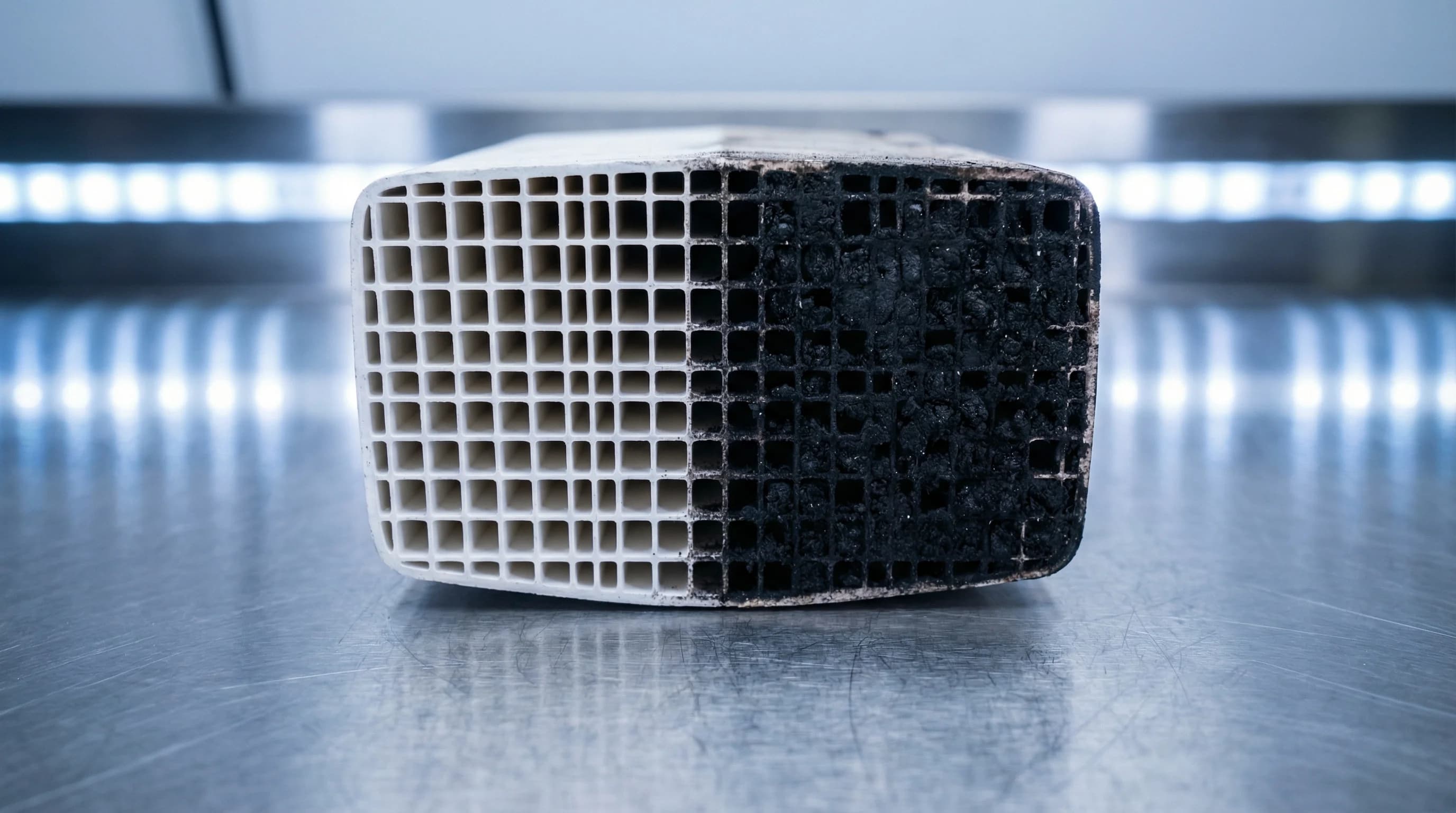
The filter substrate inside your DPF is a ceramic honeycomb. It's designed to handle high temperatures during regen, but it has limits.
The problem: Extreme temperatures from uncontrolled regens, raw fuel reaching the DPF, or a restricted exhaust can crack or melt the substrate. Once damaged, the filter can't be cleaned — it must be replaced.
What you'll notice: Sudden increase in back pressure, soot blowing from the exhaust stack, or a DPF efficiency fault code.
What to do: A melted or cracked DPF must be replaced. This is a significant repair, but a mobile mechanic can often handle it on-site.
Prevention: Don't ignore regen warnings. Address engine problems (leaking injectors, coolant intrusion) that can dump raw fuel or liquid into the aftertreatment system.
4. Temperature Sensor Failures
Your DPF system relies on multiple temperature sensors to monitor and control the regeneration process. These sensors are exposed to extreme heat and corrosive exhaust gases.
The problem: A failed temp sensor gives the ECM bad data, which can prevent regens from starting, cause regens to run too long, or trigger a derate from a failed regen.
What you'll notice: Aftertreatment fault codes referencing temperature sensors (often by location — inlet, outlet, or DOC outlet), along with failed or inhibited regens.
What to do: Temperature sensors are relatively inexpensive and can be replaced on-site by a mobile mechanic. The key is diagnosing which sensor is actually failed versus which one is reading an abnormal condition caused by something else.
Prevention: There's not much you can do to prevent sensor failure — it's exposure-related wear. Regular diagnostics can catch sensors that are starting to drift before they cause a derate.
5. Back Pressure Issues
Your engine needs exhaust to flow freely. The DPF creates some normal restriction, but excessive back pressure means something is wrong — either the DPF is overloaded or there's a restriction elsewhere in the exhaust system.
The problem: High back pressure forces the engine to work harder, reduces fuel economy, increases EGT, and can cause engine damage over time.
What you'll notice: Loss of power, poor fuel economy, turbo surge, and fault codes related to exhaust back pressure.
What to do: A mobile mechanic can measure back pressure with a gauge and determine whether the issue is a loaded DPF, a collapsed exhaust pipe, or another restriction. The fix depends on the cause.
Prevention: Stay on top of DPF maintenance and address regen issues promptly. A DPF that regens properly keeps back pressure in check.
The Big Picture
Your DPF is not optional — it's a core engine system, just like your turbo or fuel system. Ignoring aftertreatment problems doesn't make them go away; it makes them more expensive. The truckers who spend the least on DPF issues are the ones who understand how the system works, drive in ways that support passive regen, and address warning signs early.
If your DPF is acting up and you're staring at a derate code, don't try to limp it to a shop and make it worse. Call a mobile diesel service, let them run the diagnostics, and get it sorted where you sit.