When your truck breaks down on a dark highway at 2 AM, the difference between a minor inconvenience and a dangerous situation often comes down to what you packed before you left.
Every professional truck driver should carry an emergency breakdown kit. Not the cheap roadside kit from the truck stop — a real, purpose-built kit that covers safety, basic repair, communication, and comfort. Here's what to include and why.
Safety First: The Non-Negotiables
These items are required by DOT regulation and common sense. If you don't have these, stop reading and go buy them now.
Warning Triangles
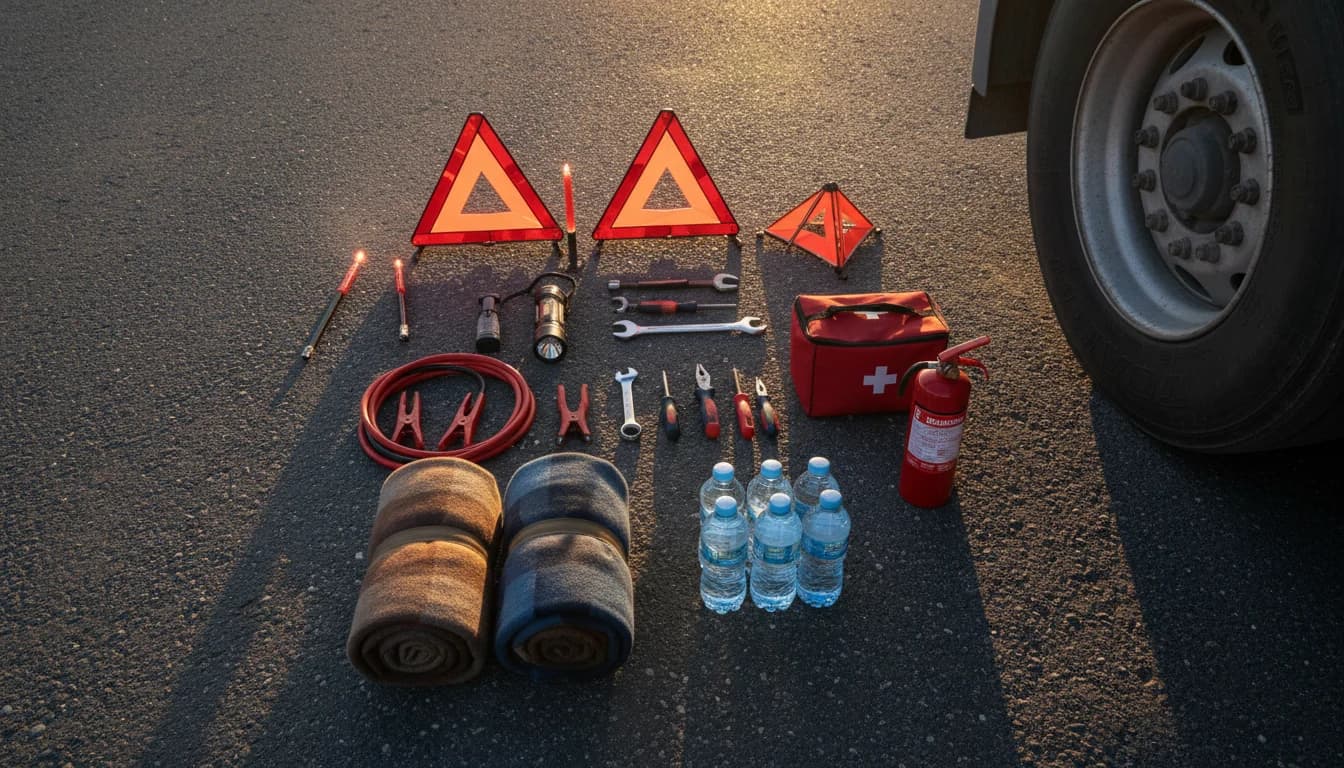
DOT requires three reflective warning triangles for every CMV. Set them at 10 feet, 100 feet, and 200 feet behind your truck on the traffic side. If you're on a curve or near a hill, extend the furthest triangle to 500 feet.
Keep them in an easily accessible location — not buried under 500 pounds of tools. Many drivers mount them on the back of the cab or inside the driver's door compartment.
Fire Extinguisher
DOT requires a minimum 5 B:C rated fire extinguisher (10 B:C for hazmat loads). Mount it in the cab within reach. Check the gauge monthly — an empty extinguisher is worse than none because it gives false confidence.
High-Visibility Vest
A ANSI Class 2 or 3 reflective vest can save your life if you need to exit the truck on the roadside at night. Keep it in the driver's door pocket for instant access.
Flashlights
Carry at least two:
- A headlamp for hands-free work (LED, 300+ lumens)
- A handheld flashlight (LED, 500+ lumens) with fresh batteries or USB rechargeable
Pro tip: magnetic-base LED work lights are invaluable for under-truck repairs at night.
Basic Repair Items
You're not trying to rebuild an engine on the shoulder. These items handle the most common roadside repairs and keep you moving until professional help arrives.
Fluids - 2 gallons of engine oil (check your spec — 15W-40 covers most diesel engines) - 1 gallon of coolant (pre-mixed 50/50) - 1 gallon of DEF - 1 quart of power steering fluid - 1 can of brake cleaner - 1 can of penetrating oil (PB Blaster or equivalent) - Small bottle of fuel anti-gel additive (winter months)
Tools (Basic Set) - Adjustable wrench (10" and 15") - Pliers (slip-joint and needle nose) - Screwdrivers (flat and Phillips, multiple sizes) - Socket set (3/8" drive, common sizes 8mm–24mm and 5/16"–1") - Utility knife - Duct tape (the mechanic's best friend) - Electrical tape and wire ties - Tire pressure gauge (0–150 PSI range for commercial tires)
Tire & Air - Tire plug kit (for tubeless tires — can be a temporary fix to reach a service point) - 12V portable air compressor or a tire inflator that connects to the truck's air system - Spare air line fittings and push-to-connect couplings - Tire valve core tool and spare valve cores
Electrical - Jumper cables or a jump pack (commercial-grade, 2,000+ peak amps) - Fuses — assorted pack covering your truck's fuse sizes - Wire, connectors, and a crimping tool for temporary wire repair - Battery terminal cleaner and anti-corrosion spray
Hoses & Belts - Assorted hose clamps (worm gear type, various sizes) - 3 feet of heater hose (3/4" — universal emergency coolant hose) - Roll of silicone tape (self-fusing — wraps a leaking hose temporarily) - Spare serpentine belt (matched to your truck — or at least know your belt number)
Communication & Navigation
Cell Phone + Charger Obvious, but make sure you have: - A quality car charger (or multiple) - A portable battery bank (20,000+ mAh) - Your mobile mechanic's number saved before you need it
CB Radio Still useful for communicating with other drivers, especially in dead zones where cell service is spotty.
Paper Map or Atlas GPS fails. Batteries die. Cell service drops. A Rand McNally Motor Carriers' Road Atlas is $15 and never runs out of battery. Know your mile markers.
Comfort & Survival
If you're waiting 2-4 hours for a mechanic on a cold night, these items matter:
- Blanket — even in summer, desert nights get cold. Thermal/emergency blanket at minimum
- Water — minimum 1 gallon, stored where it won't freeze
- Non-perishable food — granola bars, jerky, crackers
- Rain gear — a compact rain jacket keeps you functional in bad weather
- Gloves — work gloves (leather) plus winter gloves (insulated) in cold months
- Paper towels / shop rags
- Hand cleaner — Fast Orange or equivalent
- First aid kit — basic kit with bandages, antiseptic, pain reliever, and any personal medications
Organization and Storage
The best breakdown kit is useless if you can't find what you need in the dark.
- Use a dedicated toolbox or duffel bag for your kit — separate from daily tools
- Label containers and use clear bags for small parts
- Mount the kit in a consistent, accessible location — behind the seat, in a cab compartment, or in a dedicated box on the frame
- Check the kit monthly — refill used items, check expiration dates, test batteries and flashlights
The Master Checklist
Here's the complete list, organized for easy shopping:
Safety:
- 3 reflective warning triangles
- Fire extinguisher (5 B:C minimum)
- High-visibility vest
- Headlamp + handheld flashlight
Fluids:
- Engine oil (2 gal)
- Coolant (1 gal pre-mixed)
- DEF (1 gal)
- Power steering fluid (1 qt)
- Brake cleaner, penetrating oil, anti-gel
Tools:
- Adjustable wrenches, pliers, screwdrivers
- Socket set (3/8" drive)
- Utility knife, duct tape, electrical tape, wire ties
- Tire pressure gauge
Tire & Air:
- Tire plug kit
- Portable air compressor / inflator
- Spare air fittings, valve cores
Electrical:
- Jump pack or jumper cables
- Assorted fuses
- Wire, connectors, crimper
- Battery terminal cleaner
Hoses:
- Assorted hose clamps
- Heater hose (3 ft)
- Silicone tape
- Spare serpentine belt
Communication:
- Phone chargers + battery bank
- CB radio
- Paper atlas
Comfort:
- Blanket, water, food
- Rain gear, gloves (work + winter)
- Paper towels, hand cleaner
- First aid kit
What This Kit Costs
Budget approximately $200–$400 for a complete kit (excluding tools you already own and the jump pack). The jump pack adds $150–$300 but is worth every penny.
The Bottom Line
An emergency breakdown kit isn't an expense — it's insurance. The one time you need a reflective triangle at 3 AM on I-40, or a jump pack when your batteries die in January, the entire kit pays for itself.
Build it once, check it monthly, and you'll handle roadside situations with confidence instead of panic. And save a mobile diesel mechanic's number in your phone — because the best breakdown kit in the world doesn't replace a professional when you need a real repair.