Department of Transportation inspections are a fact of life in commercial trucking. Whether you're an owner-operator, a fleet driver, or a fleet manager, understanding what inspectors look for — and how to prepare — can mean the difference between a clean report and costly violations, fines, or being put out of service.
The 6 Levels of DOT Inspections
The Federal Motor Carrier Safety Administration (FMCSA) defines six levels of inspections:
Level I: Full Inspection (North American Standard)
This is the most comprehensive inspection. The inspector checks both the driver and the vehicle:
Driver checks:
- Valid CDL with proper endorsements
- Medical certificate (current and matching CDL state)
- Hours of Service (HOS) compliance — ELD or paper logs for current day + past 7 days
- Driver fitness — no apparent impairment, appropriate attire
- Alcohol and drug testing compliance
- Seatbelt use
- Record of duty status
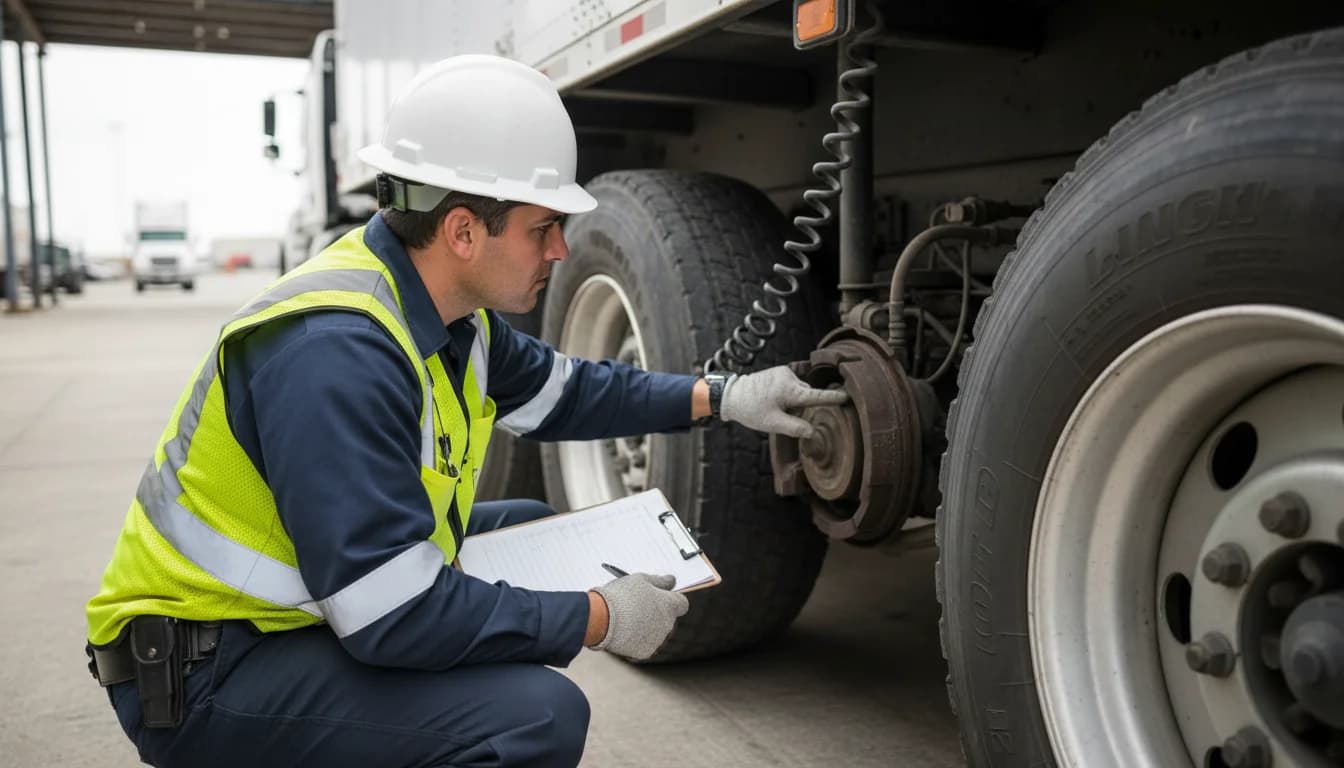
Vehicle checks (walk-around + under-vehicle):
- Brake systems (including measurement of brake components)
- Coupling devices (fifth wheel, pintle hooks, safety chains)
- Exhaust system
- Frame
- Fuel system
- Lighting devices (all required lights and reflectors)
- Steering mechanism
- Suspension
- Tires (tread depth, condition, inflation)
- Wheels, rims, and hubs
- Windshield condition and wipers
- Emergency equipment (triangles, fire extinguisher)
- Cargo securement
Level II: Walk-Around Inspection
Same as Level I but without going under the vehicle. The inspector checks everything visible from a walk-around plus all driver documentation.
Level III: Driver-Only Inspection
Focuses solely on the driver — CDL, medical card, HOS, seatbelt, and general fitness. No vehicle inspection.
Level IV: Special Inspection
A one-time examination of a specific item. Used for follow-up on a previous inspection violation or to check a specific concern (e.g., after a recall notification).
Level V: Vehicle-Only Inspection
The vehicle is inspected without the driver present. Often done at carrier facilities during compliance reviews.
Level VI: Enhanced NAS Inspection for Radioactive Materials
A Level I inspection plus additional checks specific to radioactive shipments. Most commercial drivers will never encounter this.
The Pre-Trip Inspection Checklist
Smart drivers perform their own inspection before an official DOT inspector ever looks at their truck. Here's what to check:
Brakes
Brakes are the #1 out-of-service violation in DOT inspections.
- Brake adjustment — pushrod travel within limits (typically 1.5-2 inches depending on chamber size)
- Brake lining thickness — minimum 1/4 inch (1/32 inch for disc brakes)
- No air leaks in brake lines or chambers
- Brake drums/rotors in good condition (no cracks, no heat damage)
- ABS system functioning (warning light cycles on startup, then turns off)
- Parking brake holds on grade
Tires
- Tread depth: minimum 4/32" on steer tires, 2/32" on drive and trailer tires
- No cuts, bulges, or exposed cords
- Proper inflation (check with a gauge, not a thump)
- No mismatched sizes on same axle
- Valve caps in place
- No re-grooved tires on steer axle
Lights and Reflectors
- All headlights, taillights, brake lights, and turn signals working
- Clearance/marker lights on cab and trailer (top and side)
- Reflective tape on trailer (alternating red/white)
- License plate light
- No cracked or broken lenses
- All lights proper color (red rear, amber front/side)
Coupling
- Fifth wheel properly locked (no gap between plate and jaws)
- Kingpin not cracked or worn
- Fifth wheel mounting bolts tight
- Glad hands properly connected and sealed
- Safety chains/cables attached (if applicable)
- Slider pins locked (if sliding fifth wheel or tandem)
Exhaust System
- No leaks forward of or directly below the cab
- Exhaust components properly mounted
- No holes or damage to muffler or piping
Steering
- No excessive play in the steering wheel (max 2 inches for power steering at 20-inch wheel diameter)
- Power steering fluid at proper level
- No leaks in steering gear or hoses
- Tie rods and drag links secure
Suspension
- Leaf springs — no missing, broken, or shifted leaves
- Air bags — no leaks, cracks, or bulges
- Shock absorbers — no leaks, properly mounted
- U-bolts tight
- Torque rods secure
Frame and Body
- No cracked or broken frame members
- Frame cross members secure
- Mud flaps in place and proper length
- No sharp edges or protruding metal
Emergency Equipment
- Three reflective warning triangles
- Fire extinguisher — fully charged, properly mounted, UL rated (minimum 5 B:C for trucks, 10 B:C for hazmat)
- Spare fuses (unless using circuit breakers)
Cargo Securement
- Load properly distributed
- Tie-downs adequate for weight (minimum 1 tie-down per 10 feet of cargo, minimum 2 per load)
- No shifting cargo
- Tailgate/doors secured
- Tarps secure (if applicable)
Driver Documentation
- CDL valid and in your possession
- Medical certificate current (check expiration date)
- ELD or paper logs current and accurate
- Vehicle registration current
- Annual inspection certificate (within past 12 months)
- Proof of insurance (USDOT number displayed, MC authority if required)
- IFTA sticker (if applicable)
- Hazmat documentation (if hauling hazmat)
Top 10 Out-of-Service Violations
Based on FMCSA data, these are the violations most likely to put you out of service:
1. Brake adjustment — push rod travel exceeds limit 2. Hours of Service violations — driving over limits 3. Tire condition — tread depth below minimum, flats, or damage 4. Brake components — cracked drums, worn linings, air leaks 5. Lighting violations — non-functional required lights 6. No valid CDL — expired, wrong class, or missing endorsements 7. No/expired medical certificate 8. Vehicle not properly placarded (hazmat) 9. Cargo securement — insufficient tie-downs 10. False log book / ELD tampering
How to Prepare Your Fleet
For fleet managers, systematic DOT preparation reduces violations and keeps CSA scores low:
- Schedule regular inspections — don't wait for DOT. Annual inspections are required, but quarterly self-audits catch problems early
- Document everything — keep inspection records organized and accessible
- Train drivers on pre-trip procedures and what inspectors look for
- Track violations — identify patterns (e.g., recurring brake issues on specific units)
- Use mobile inspection services — DOT-qualified mobile mechanics can perform annual inspections at your yard, saving time and catching problems before they become violations
The Bottom Line
DOT inspections aren't something to fear — they're something to prepare for. Drivers who perform thorough pre-trip inspections and keep their documentation current pass inspections without issues. Fleet managers who invest in preventive maintenance and regular self-audits keep their CSA scores clean and their trucks on the road.
If you need a DOT-qualified inspection performed at your location, call Mobile Diesel USA dispatch in the Phoenix metro and ask whether a qualified inspector is available for your truck. Mechanics can repair many violations on site so you can get back in compliance without a shop visit.