The trucking industry moves $940 billion in freight across America every year. And for most of its history, it has been overwhelmingly male. That's changing — slowly, but meaningfully.
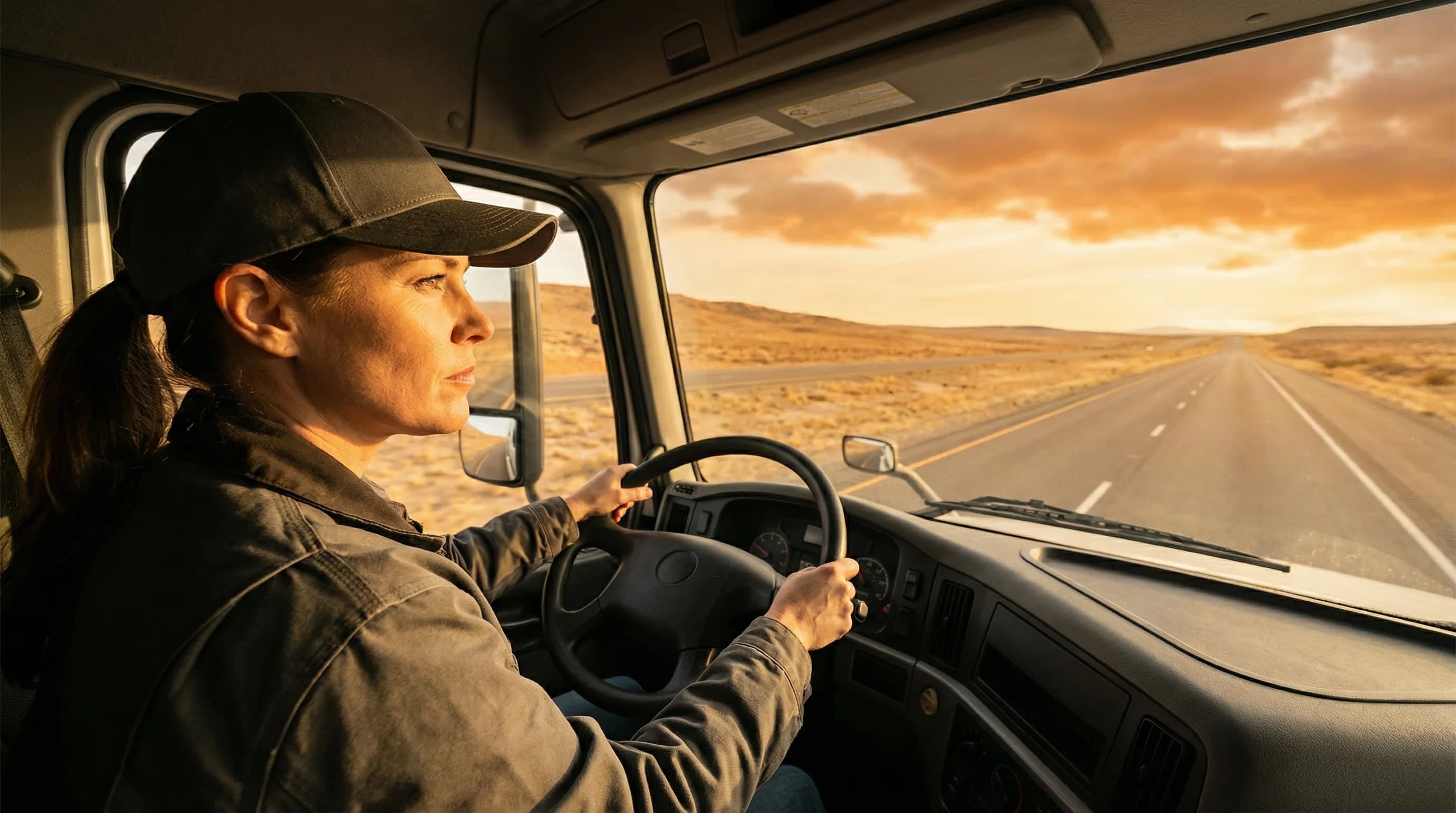
Today, women make up approximately 9.5% of truck drivers in the United States, up from 4.6% in 2010. That number represents roughly 375,000 women behind the wheel of commercial vehicles. It's progress, but it also means that more than 90% of the industry is still male — and the experience of being a woman in trucking reflects that imbalance.
The Numbers Don't Lie
The statistics paint a complicated picture:
- 9.5% of truck drivers in the U.S. are women (up from 4.6% in 2010)
- 92% of women in trucking report experiencing workplace harassment
- 47% say they've considered leaving the industry due to safety concerns
- 28,500+ diesel technician positions go unfilled annually
- The driver shortage currently sits at approximately 78,000 — and women are the largest untapped labor pool
The industry needs women. The question is whether the industry is willing to do what it takes to support them.
Challenges Women Drivers Face
Safety on the Road
The most significant barrier for women in trucking isn't physical strength or technical skill — it's safety. Women truck drivers face a unique set of risks that the industry has been slow to address:
Truck stops and rest areas. Many truck stops lack adequate lighting, security cameras, and safe parking. For women driving solo, finding a safe place to sleep can be a nightly challenge. The DOT's Jason's Law truck parking survey found that 75% of drivers regularly struggle to find safe parking — and women drivers report feeling significantly less safe than their male counterparts.
Harassment. The 92% harassment statistic isn't just a number. It represents verbal harassment from other drivers, inappropriate behavior from shippers and receivers, and in some cases, physical threats. Many women report that reporting harassment leads to retaliation or dismissal rather than resolution.
Equipment design. Most truck cabs, seats, and controls were designed with the average male body in mind. Women often deal with seats that don't adjust enough, reach issues with controls, and sleeper berths that weren't designed for their comfort or safety.
The Lesson from Ride-Share Platforms
The ride-share industry learned the hard way what happens when platforms don't prioritize safety. Uber faces over 3,188 active lawsuits related to sexual assault and harassment, including an $8.5 million bellwether verdict. In one Nashville case, a female driver's SOS button went unanswered. These are lessons for every platform that connects people for service.
At Mobile Diesel USA, we took these cases seriously. Today every customer sees the mechanic's name, photo, truck and full plate before they arrive, can share the live status with someone they trust, and pays in the app instead of handing over cash at the truck.
Organizations Leading the Change
Several organizations are doing critical work to support women in trucking:
Women in Trucking (WIT)
Founded in 2007, Women in Trucking is the largest organization dedicated to encouraging women's employment in the trucking industry. With over 8,000 members, WIT provides networking events, mentorship programs, scholarships, and industry advocacy. Their annual Accelerate! Conference is the premier event for women in the industry.
Real Women in Trucking (RWIT)
RWIT focuses on advocacy and grassroots support, with a particular emphasis on safety issues. They provide a community for women drivers to share experiences, report safety concerns, and advocate for industry changes.
African American Women's Trucking Association (AAWTA)
AAWTA specifically supports Black women in trucking through mentorship, training resources, and community building. They address the intersectional challenges that women of color face in the industry.
FMCSA Women of Trucking Advisory Board (WOTAB)
This federal advisory committee provides recommendations to the FMCSA on policies affecting women in trucking, including safety regulations, training standards, and workplace protections.
YouTube Channels Worth Following
Some of the most valuable resources for women considering trucking come from women who are already doing it:
- Angelica Larsson — A Swedish truck driver sharing authentic daily life on the road with a massive international following
- Big Rig Barbie — Real talk about the realities of being a woman in trucking, no filter
- Diesel Queen — A woman truck driver and diesel enthusiast covering everything from maintenance to lifestyle
- Jay Rich — A veteran woman trucker with years of experience and practical training content
These channels provide something no recruitment brochure can: an honest look at what daily life in trucking actually looks like for women.
CDL Training Programs
For women looking to enter the industry, choosing the right training program matters:
WyoTech in Laramie, Wyoming offers a comprehensive diesel technology program with strong industry placement rates. Their hands-on training covers everything from basic maintenance to advanced diagnostics.
Wallace State Community College in Hanceville, Alabama provides an accredited diesel technology program that has been producing skilled technicians for decades. Their program is well-regarded by employers and offers financial aid options.
Many carriers also offer company-sponsored CDL training, which can be a good option for women who want to enter driving with an immediate job placement. However, be cautious of training contracts that lock you in for extended periods — read the fine print.
How Mobile Diesel USA Supports Women Drivers
What every driver gets today, whoever they are:
- Know who's coming — the mechanic's name, photo, rating, service truck and full plate before they arrive
- Share your status — send the live status link to a dispatcher, partner or friend
- No cash at the truck — you approve the price in the app and pay by card; nobody should ask for cash
- A person on the phone — Phoenix dispatch answers 7 AM to 7 PM Arizona time, every day
If you ever feel unsafe, leave or stay locked in your cab and call 911 first.
The Path Forward
The trucking industry's driver shortage isn't going to solve itself. With 78,000 unfilled positions and an aging workforce, the industry needs to attract and retain women — not just recruit them and hope for the best.
That means investing in safety at every level: better truck stop infrastructure, stronger harassment policies with real enforcement, equipment that fits all bodies, and technology platforms that treat safety as a core product requirement rather than a liability defense.
Women have been in trucking since the industry began. Lillie Drennan became the first licensed female truck driver in 1929. The question was never whether women could do this work. The question is whether the industry will build an environment where they can do it safely.
At Mobile Diesel USA, our answer is yes — and we're building it now. If you're a woman driver who needs service, or a woman mechanic who wants to join our network, you'll find a platform that was designed with you in mind from day one.