Starting a mobile diesel repair business is one of the best career moves a diesel mechanic can make. But the upfront investment in tools and equipment can feel overwhelming. The key is building your toolkit strategically — investing in the essentials first, then expanding as revenue grows.
The Essentials: What You Need on Day One
These are the non-negotiable tools you need before taking your first job. Budget approximately $8,000–$12,000 for this starter kit.
Diagnostic Tools ($2,000–$4,000)
Without a diagnostic scanner, you're limited to mechanical repairs only — which cuts out a huge portion of the job market.
- Entry-level: Noregon JPRO (used/refurbished) or Autel MaxiSys HD — covers most major platforms
- Budget option: Start with a quality generic OBD-II scanner with J1939/J1708 protocol support ($300–$500), then upgrade to JPRO or platform-specific software as revenue allows
- Must-have adapters: Nexiq USB-Link 2 or equivalent communication adapter
A diagnostic tool pays for itself within the first few jobs. Diagnostics alone can be billed at $150–$300 per scan.
Hand Tools ($2,000–$3,000)
You probably already own many of these if you've been a shop mechanic. Focus on heavy-duty sizes.
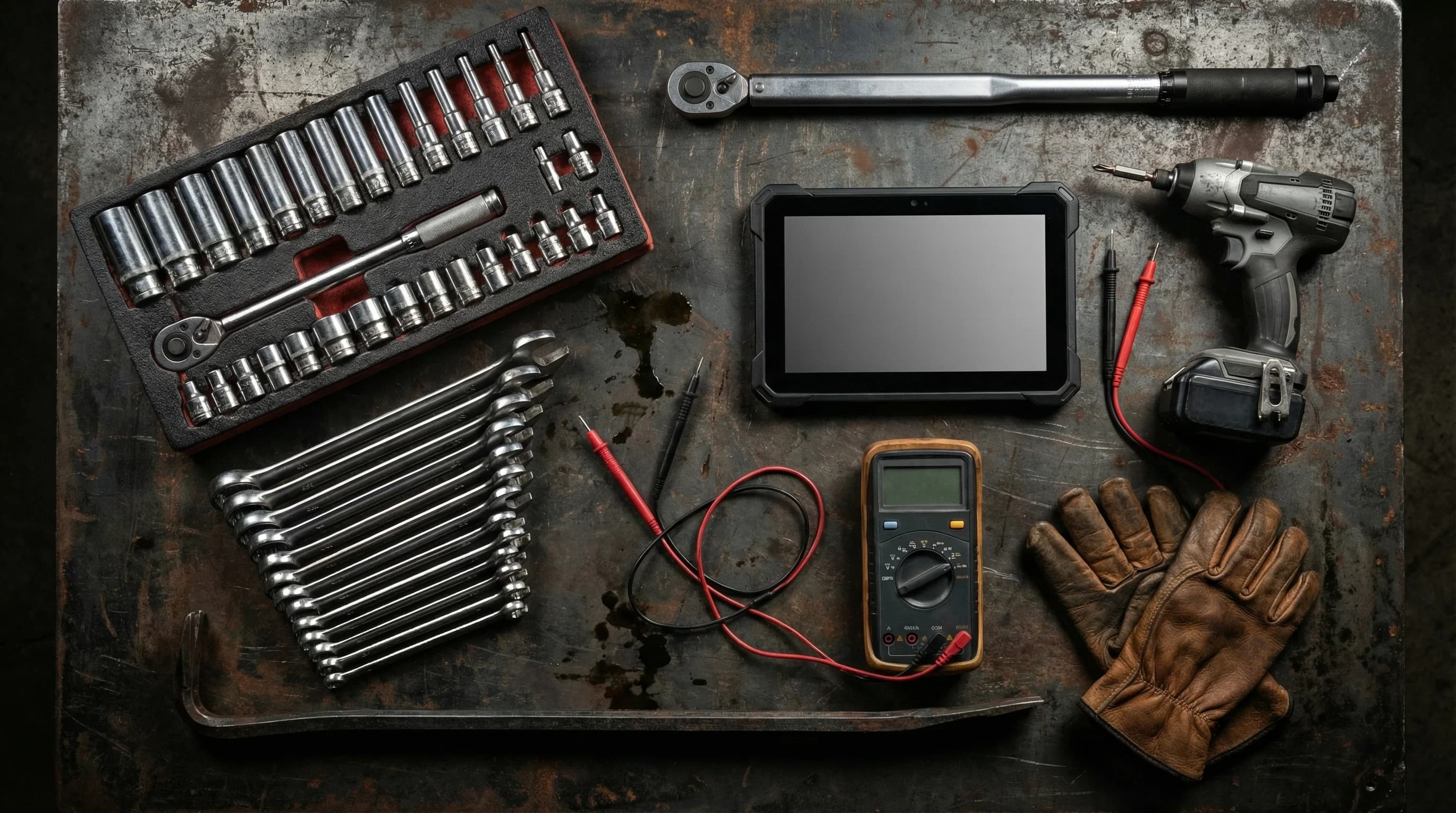
- Socket sets: 3/8", 1/2", and 3/4" drive in SAE and metric (deep and shallow)
- Wrench sets: Combination wrenches 1/4" to 1-1/2", metric 6mm to 36mm
- Screwdrivers: Full set including large flat heads for prying
- Pliers: Needle nose, channel lock (2 sizes), snap ring (internal and external)
- Hammers: Ball peen, dead blow, brass drift
- Pry bars: Various lengths
- Allen keys / Torx: Full SAE and metric sets, including security Torx
- Torque wrenches: 1/2" drive (50–250 ft-lb) and 3/4" drive (100–600 ft-lb)
Budget tip: Craftsman, ICON (Harbor Freight), and Tekton offer professional-quality tools at 40-60% less than Snap-on. For tools you use daily, invest in quality. For specialty tools you use occasionally, budget brands are fine.
Air Tools ($500–$1,000)
- Impact wrench: 1/2" cordless (Milwaukee M18 FUEL or DeWalt 20V Max) — essential for lug nuts, u-bolts, and quick disassembly
- Impact wrench: 3/4" or 1" drive for larger fasteners (wheel nuts, suspension bolts) — can be air-powered if you have a compressor
- Die grinder: For cleaning, grinding, cutting
- Air compressor: Minimum 30-gallon, 6 CFM @ 90 PSI for the service truck
Electrical Testing ($300–$500)
- Multimeter: Fluke 87V or equivalent — the gold standard for automotive electrical diagnosis
- Test light: 12V and 24V capable
- Wire strippers, crimpers, connectors: Weatherproof connectors for mobile repairs
- Battery load tester: Or a modern electronic battery analyzer
- Jump pack: Commercial-grade, capable of starting a diesel (minimum 2,000 peak amps)
Specialty Diesel Tools ($1,000–$2,000)
- Brake tools: Slack adjuster wrench, brake spring tools, brake drum puller
- Fuel system: Fuel filter wrenches (specific to common platforms), fuel pressure gauge
- Cooling system: Pressure tester kit, hose clamp pliers
- Air system: Air line fittings and tubing, air leak detection solution (soapy water works too)
- Lighting: LED work lights — you'll do a lot of work after dark
Service Truck Setup ($1,000–$2,000)
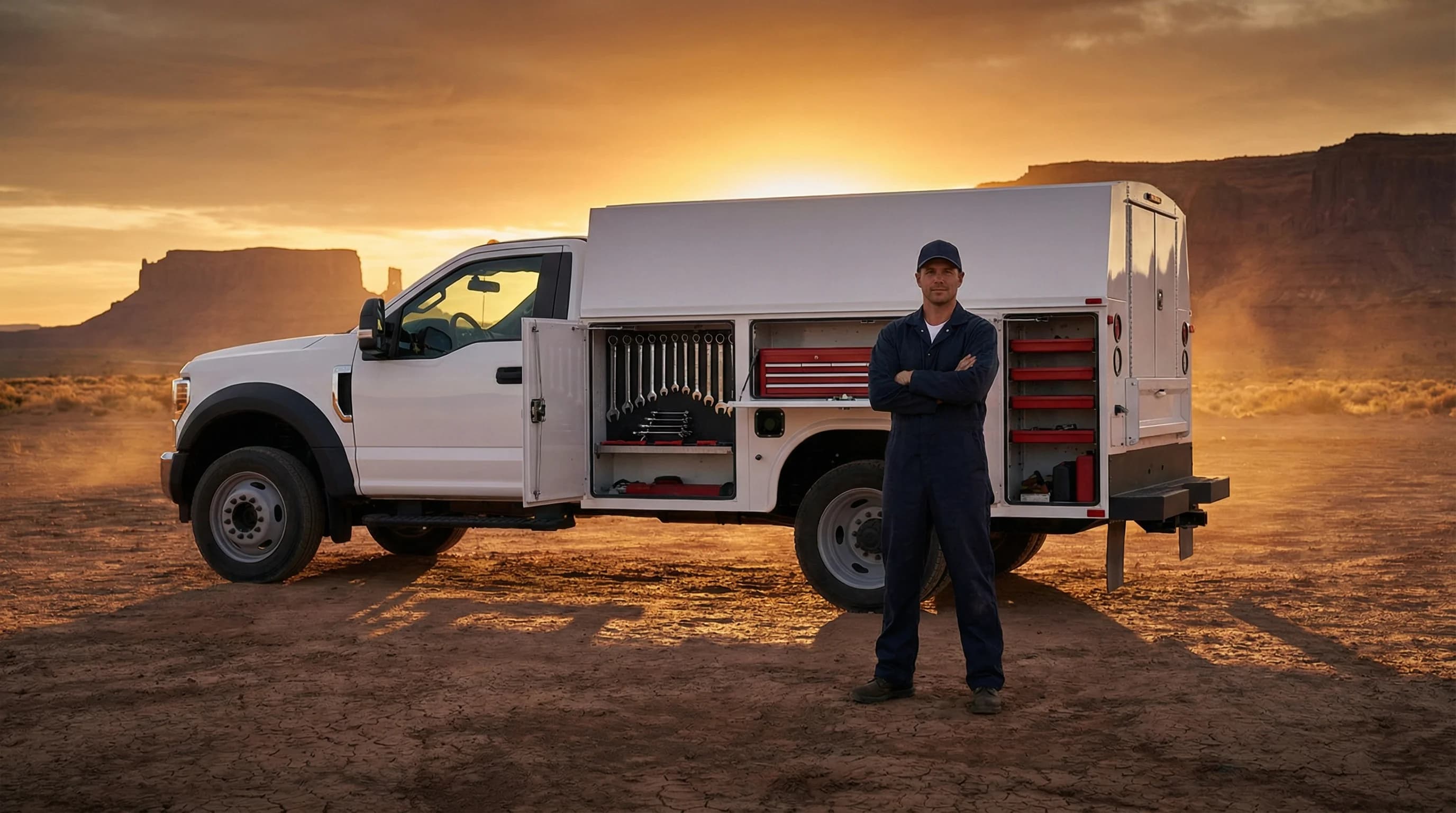
Your truck or van is your mobile shop. At minimum:
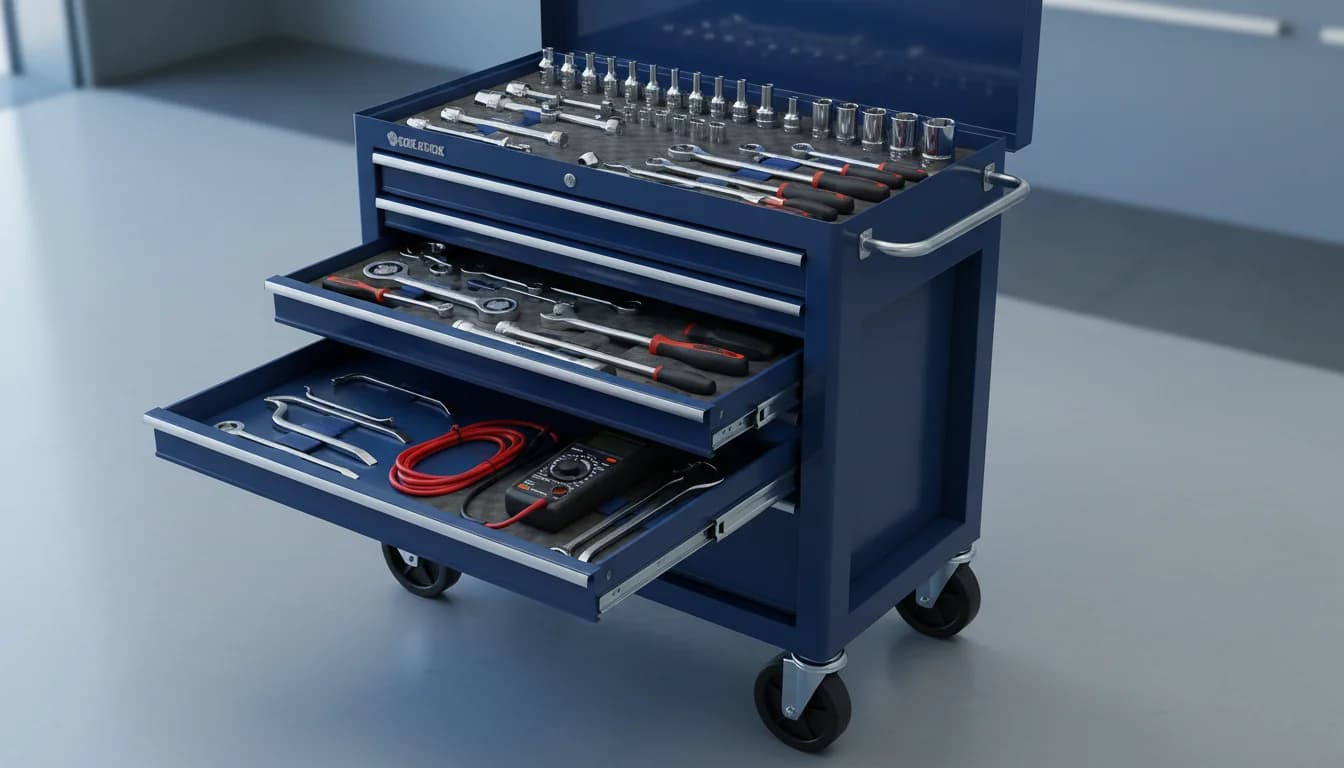
- Tool storage: Shelving, drawer units, or truck-bed toolbox
- Fluid containment: Drain pans, absorbent pads, waste oil container
- Safety equipment: Fire extinguisher, first aid kit, safety glasses, gloves, ear protection, reflective vest
- Common consumables: Brake cleaner, penetrating oil, electrical tape, zip ties, wire loom, thread sealant
Phase 2: Expand as You Grow ($3,000–$5,000)
Once you're generating steady revenue, these additions increase the range of jobs you can handle:
- Platform-specific diagnostic software: Cummins INSITE, Detroit DDDL, or PACCAR ESA
- Hydraulic press (portable) or large C-clamps for bearing and bushing work
- Welding capability: Miller Multimatic 215 or similar multi-process welder with generator power
- Additional impact sizes: Complete 1" drive impact socket set
- A/C tools: Manifold gauges and recovery machine (requires EPA 608 certification)
- Advanced electrical: Oscilloscope or power probe for complex electrical diagnosis
- Wheel tools: Torque multiplier for wheel nuts (saves time and your back)
Phase 3: Premium Upgrades ($5,000+)
These investments differentiate you from competitors and open premium service offerings:
- Full OEM diagnostic suites for 2-3 major platforms
- Mobile crane/hoist for component removal
- Nitrogen tire inflation kit
- Advanced aftertreatment tools — DPF cleaning equipment, SCR diagnostic tools
- Alignment tools for fleet work
- Generator upgrade — higher capacity for running larger tools simultaneously
- Inventory of common parts — filters, belts, hoses, starters, batteries for top platforms
Buying Strategy: New vs. Used
Buy New - Diagnostic software (licensing and updates) - Multimeters and precision measuring tools - Safety equipment - Cordless power tools (battery warranty matters)
Buy Used - Socket and wrench sets (metal doesn't expire) - Air compressors - Basic hand tools - Service truck (3-5 year old commercial van or truck) - Welders (with verified condition)
Where to Find Deals - Facebook Marketplace — mechanics retiring or upgrading often sell kits - eBay — great for specific tools at below-retail - Harbor Freight — ICON line offers surprising quality for daily-use tools - Estate sales and auctions — sometimes a goldmine for complete tool sets - Tool truck promotions — Snap-on, Matco, and MAC run seasonal deals
Common Mistakes New Mobile Mechanics Make
- Buying everything at once — Start lean and expand with revenue. Your first jobs will teach you what you actually need.
- Over-investing in one brand — Brand loyalty is fine, but don't pay 2x for a tool you'll use twice a year.
- Skipping diagnostics — A diagnostic scanner is your highest-ROI investment. Don't try to start without one.
- Ignoring organization — A disorganized truck costs you 30-60 minutes per day in searching for tools. Invest in proper storage early.
- No backup plan — Keep a backup jump pack, backup multimeter, and extra common parts. One dead tool at a job site can cost you a customer.
The Bottom Line
You don't need $50,000 in Snap-on tools to start a successful mobile diesel repair business. A thoughtful $8,000–$12,000 investment in the right tools gets you in the door. Let your revenue fund your growth, and within 12-18 months you'll have a fully equipped mobile shop.
The most important tool isn't in your toolbox — it's your knowledge and your reputation. Start with the basics, do excellent work, and the rest follows.